



Best Practices
It's all in the name.
In the context of optimization, this category refers to well known preventative measures for expected problems. Failure to follow these recommended patterns often lead to common defects, security breaches, and other expected bad outcomes.
What are they?
Take an example in cooking. One best practice in cooking pasta is to always leave a wooden spoon over a pot of boiling water. Without the wooden spoon, your pasta will still cook, but the spoon will do a good job of preventing the water from boiling over the sides.
Taking care to use risk mitigation strategies in web development can be much more rewarding. Testing your web application in multiple browsers is one smart mitigation strategy. Ninety percent of users may use Google Chrome or Mozilla Firefox, but if you do not test your website in Microsoft Edge, ten percent of your users could be unable to login to your website, and you would never know until they call your office. Best practices today avoid future problems tomorrow.
A few best practices in web development
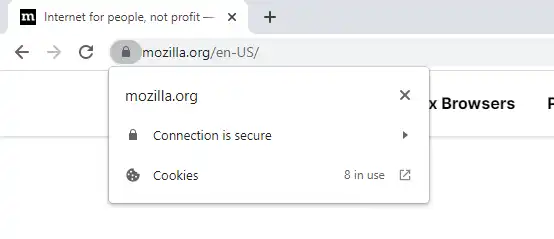
- Securing your website with Hypertext Transfer Protocol Secure (HTTPS):
- Problem: Bad actors can intercept HTTP requests and read sensitive data or even fake responses.
- Solution: Obtain an HTTPS certification and enable HTTPS on all APIs.
![Google Chrome browser indicating that a website is using HTTPS]()
- Keeping user trust when requesting their geolocation:
- Problem: Users are mistrustful of or confused by pages that automatically request their location on page load.
- Solution: Always request geolocation permission after a user action, not on page load, and have a backup functionality if they do not want to provide it.

Who decides the "best" best practices?
Then
There is no definitive guide to best practices, and there doesn't need to be. As the field of software development has matured, different individuals, teams, and organizations have encountered the same basic problems over and over. Before open-source development, the "correct" solution would often come in the form of developer's guides from large enterprise companies.
Now
In the modern day, cornerstone projects such as Kubernetes and React.js are open-sourced, and anyone can throw an idea into the ring. As community projects, developers can form a consensus through discussion and even edit the documentation themselves to include newly found "best practices". These lists eventually get manually collected and added into the automated code quality checks that most development teams will deploy in their delivery process. This ensures that those not "in the know" can still follow best practices.

